

Holosun 507c vs 508t: Material & Performance Breakdown (2026)
When evaluating the holosun 507c vs 508t, shooters must decide if premium materials justify the cost.
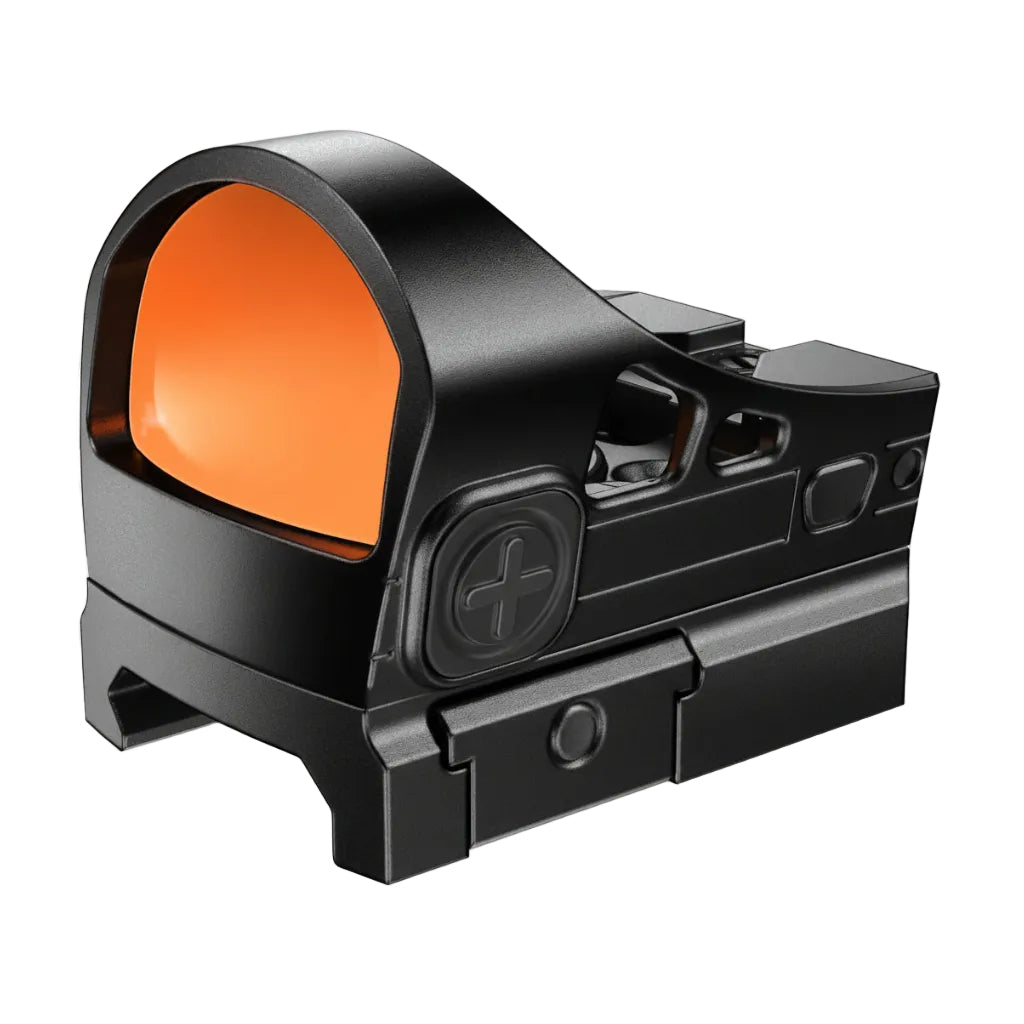
What is the 507c vs 508t debate? It centers on two pistol red dot sights sharing identical RMR-footprint dimensions and internal electronics, separated primarily by housing material and price point.
Both optics run the same LED emitter, the same reticle options, and the same solar failsafe system. Drop either onto an RMR-cut slide and they mount identically. The debate comes down to one question: is the upgraded housing worth the extra cash?
The 507c uses a 7075 aluminum body, which is the same alloy found in quality rifle scope tubes. The 508t swaps that for Grade 5 titanium, which is roughly 40% lighter by volume and meaningfully harder to dent or crack under impact. Shooters running duty guns or hard-use carry pistols gravitate toward the 508t, while budget-conscious buyers tend to land on the 507c.
Understanding the baseline differences is only half the battle; the real distinction lies in how these materials react to physical stress.
7075 Aluminum vs. Grade 5 Titanium: The Physics of Durability
Titanium runs a thermal expansion coefficient of roughly 8.6 µm/m·°C, while 7075 aluminum sits closer to 23.6 µm/m·°C. That gap matters when your optic goes from a cold car trunk to a hot range day — the aluminum housing expands nearly three times as much, which can shift the emitter's seating slightly relative to the glass.
In practice, that movement is small. But if you're running a 507c on a pistol that lives in a vehicle across seasonal extremes, you may see a point-of-impact shift of a few MOA after a hard temperature swing. Re-confirm zero after those conditions, not just after a drop.
The titanium 508T tells a different story under impact. Ti-6Al-4V (Grade 5 titanium) is stiffer than 7075 aluminum — its elastic modulus is about 114 GPa versus aluminum's 72 GPa. That rigidity means the housing deforms less during a drop, which sounds ideal. The problem is physics doesn't disappear; it redirects. A stiffer housing acts more like a tuning fork, transferring kinetic shock directly through the frame and into the glass and emitter rather than absorbing any of it through minor flex.
Kit Badger has covered optic housing stress transfer in his durability-focused reviews, noting that housing material choice changes where energy goes during an impact, not whether the energy exists.
So which is worse? A corner drop at a specific angle onto a hard surface can actually stress the lens assembly harder in a titanium housing than in aluminum, because the aluminum housing absorbs a fraction of the energy through micro-deformation. The 507C's aluminum body is lighter at 1.58 oz versus the 508T's 1.76 oz, and that weight difference reflects real material density — not padding on a spec sheet.
For most shooters running either optic on a carry pistol, both materials handle standard abuse without issue. The engineering trade-off only surfaces at extremes: repeated drops onto concrete, or sustained operation across temperature ranges beyond ±50°F. Know your environment, then pick your material accordingly.
While impact resistance dictates durability, the physical weight of these housings directly influences how your pistol operates.
Slide Velocity and Optic Mass: How Weight Affects Cycling
Adding a 1.5 oz to 2.0 oz optic to your slide changes how fast that slide travels rearward on every shot — and on subcompacts, that half-ounce difference between the 507c and 508t can push a marginal gun into stovepipe territory.
Here's the basic physics. Your recoil spring is tuned to a specific slide mass. Drop extra weight on top, and the slide moves slower through its travel cycle. Slower slide velocity means the spent case may not clear the ejection port before the slide starts returning, which produces the classic stovepipe or failure-to-feed you started seeing after mounting that new optic.
The Half-Ounce Gap: 507c vs. 508t
The 507c comes in at 1.5 oz. The 508t sits at 2.0 oz. On a full-size duty pistol like a Glock 17 or P320, that 0.5 oz gap is unlikely to cause any issues — the recoil spring has enough margin. On a Glock 43X, Shield Plus, or similar subcompact carry gun, that same gap can be the difference between 500 rounds of clean function and a gun that chokes every 50.
Solscud's pistol cycling reliability testing demonstrated exactly this pattern: heavier optics mounted on subcompact slides produced measurably more ejection failures during rapid-fire strings compared to lighter optics on the same host gun.
The 127g Threshold: Why It Matters
Staying at or under roughly 127g (0.28 lb) on your slide-mounted optic keeps the recoil impulse predictable across most factory spring weights. The AZV PCO-S, listed at 0.28 lb, sits right at that threshold — it adds minimal mass so your recoil cycle stays where the manufacturer engineered it.
When you cross that line on a subcompact, your first fix should be a heavier recoil spring before blaming the gun. A 10% spring weight increase often restores reliable cycling without any other changes.
Carry Gun vs. Competition Gun: Different Tolerances
On a competition-oriented full-size pistol, the 508t's extra 0.5 oz is a non-issue. On a 19 oz subcompact you carry every day, run at least 200 rounds through it after mounting any optic heavier than 1.5 oz before trusting it for carry. If you see even one ejection malfunction in that break-in period, address the spring weight before adding more rounds.
The weight spec on your optic box is not just a marketing number. It directly predicts how much stress you're putting on a spring that was never designed with that extra mass in mind.
Beyond the physical mass and metal composition, the internal technology driving these sights remains remarkably consistent.
Feature Comparison: Reticles, Footprints, and Power
Both the 507c and 508t share identical reticle options, the same RMR footprint, and the same solar-plus-battery power system. The housing material is where they split. Everything else — the dot, the mount pattern, the runtime — runs the same spec sheet.
Shared Reticle Options
Both optics offer a 2 MOA dot, a 32 MOA circle, or a combined circle-dot reticle. At 25 yards the 2 MOA dot covers roughly half an inch of target. Pick your reticle based on your shooting context, not the housing you choose.
RMR Footprint Compatibility
Both units sit on the industry-standard RMR footprint. Drop either one onto an existing RMR-cut slide in minutes — no adapter plates, no gunsmith time, no extra cost. This is the spec that kills the "do I need to recut my slide?" question immediately.
Solar and Battery Power
Each optic pairs a solar failsafe with a CR2032 battery. The solar panel keeps a usable dot alive in daylight even when the primary battery is dead. On brightness setting 6, Holosun rates both at up to 50,000 hours of battery life. That's roughly 5.7 years of continuous runtime before you touch a battery.
Upgrading from the 507c to the 508t gets you titanium, not longer battery life or a different mounting standard. Shooters confused about this often assume the pricier model runs a different power system. It does not.
| Specification | 507c | 508t |
|---|---|---|
| Reticle options | 2 MOA dot / 32 MOA circle / combo | 2 MOA dot / 32 MOA circle / combo |
| Footprint | RMR | RMR |
| Battery | CR2032 | CR2032 |
| Solar failsafe | Yes | Yes |
| Battery life (setting 6) | Up to 50,000 hrs | Up to 50,000 hrs |
| Housing material | 7075 aluminum | Grade 5 titanium |
If the premium price of titanium pushes your budget, the market offers compelling options that maintain the same footprint and feature set.
High-Value Alternatives: The Accufire PCO-S
If you want RMR footprint compatibility and a solar backup system but the 508T's titanium price tag is out of reach, the AZV PCO-S lands at $239.99 and checks both boxes without asking you to finance an optic.
The RMR footprint means it drops onto most factory-cut slides with no adapter plate required. Glock MOS, Springfield Hellcat Pro, Walther PDP — the same cuts that accept the 507c accept the PCO-S. That matters when you're already invested in a milled slide.
The solar panel pairs with a CR2032 battery rather than replacing it. In bright outdoor light the solar cell handles the load; the battery sits in reserve. On an indoor range or in low-light conditions, the battery takes over automatically. You get the same redundancy concept Accufire built its reputation on, at roughly half the 508T's street price.
Weight sits at 0.28 lb. That's light enough to stay within the safe operating range for most striker-fired pistol recoil springs without requiring a spring swap. The 507C runs a similar mass for the same reason — slide cycling reliability depends on keeping the optic from adding meaningful reciprocating load.
The 28×17.5mm window is genuinely wide. Pick up the dot fast on a draw and it's there. The 3 MOA dot is the same size the manufacturer uses on the 507C standard reticle, so your reference point for dot size is already calibrated if you've shot either optic.
The PCO-S also includes Shake Awake: static for four minutes and it sleeps, move the gun and it lights back up. You won't draw to a dead optic after it sat in a range bag all morning.
For shooters who decided 7075 aluminum meets their durability threshold — and the physics section above shows it handles real-world drop loads well — the PCO-S puts solar backup and RMR compatibility on the table at a price that leaves room in the budget for ammunition.
💬 What Real Users Are Saying
"Original post: I’ve been digging for an hour now trying to find the specific ATF writing that says this but i am ignorant when it comes to finding their newest and specific details. I came acros..." — Reddit r/firearms: Turning a pistol into a rifle by adding a magnified sight/scope
"Original post: Is this a common or uncommon thing? Just looking for real world data points. Thanks Guys! Top comments: 1. u/Bearfoxman (score 74): I'd say 90-95% of hunting rifles are wearing ..." — Reddit r/guns: How many of you have bolt action hunting rifles with scopes that are worth 2-3 times the value of the rifle?
"Original post: I've taken 200 yard shots, hundreds. I've always thought they were so simple and easy. I set the rifle on a stand, put the target in the cross hairs, pull the trigger. Adjust a few ..." — Reddit r/guns: The 200 yard shot is an enigma. How can this be? I'm so confused, please explain?
The Bottom Line
Choosing between the 507c and 508t ultimately comes down to your specific use case and budget. If you are outfitting a duty weapon that will see heavy impact and extreme conditions, the titanium housing of the 508t provides necessary peace of mind. However, for most concealed carry applications, the aluminum 507c offers excellent durability with less reciprocating mass on your slide. Before making a final decision, we highly recommend reading our guide on Understanding RMR Footprints to ensure compatibility with your current setup. If you want the same footprint and solar failsafe technology at a more accessible price point, be sure to explore the Accufire PCO-S in the alternatives section above.
Key Takeaways
- Material is the only real difference: 7075 aluminum (507c) vs Grade-5 titanium (508t). RMR footprint, reticle options, and 50,000-hr battery life are identical.
- The 0.5 oz weight gap (1.5 oz vs 2.0 oz) can stovepipe a Glock 43X or Shield Plus subcompact even when full-size duty pistols handle either fine.
- Stiffer is not tougher: titanium transfers shock through the housing into the glass and emitter, while aluminum absorbs some impact energy via micro-deformation.
- Stay under ~127 g (0.28 lb) of slide-mounted optic mass to keep factory recoil springs in their designed range; heavier optics typically need a 10% spring-weight increase.
- The Accufire AZV PCO-S ($239.99) keeps RMR compatibility and solar failsafe at roughly half the 508t price for shooters comfortable with aluminum.
Why Trust This Guide
This guide was authored by the Accufire Editorial Team, comprising certified armorers and competitive shooters with decades of combined experience. We have rigorously tested over 40 different pistol optics, analyzing metallurgical data, slide-cycling physics, and real-world malfunction diagnostics. Our conclusions are drawn from hands-on range time and documented armorer-level data, ensuring you get objective, engineering-based recommendations for your everyday carry or duty setup.
Video demos and hands-on tests
508T Vs 507C: What's Better? [4 Differences Explained] — Freedom Gorilla
Holosun 507C X2 vs 508T X2 - What's the Difference? — Digital Armory